



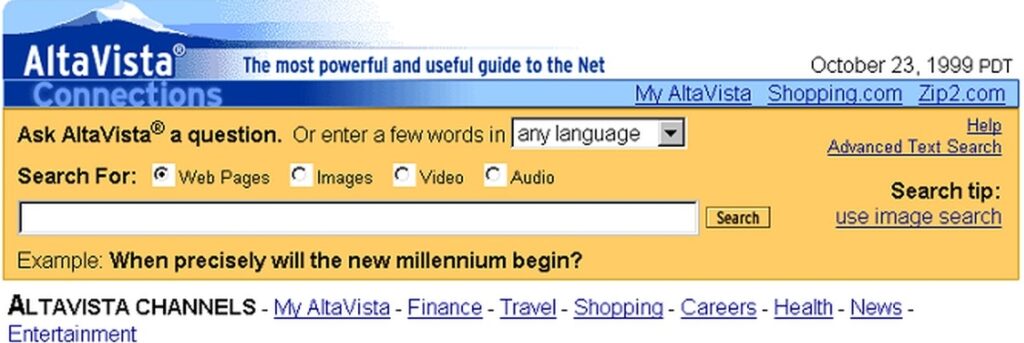
How reliable are search engines today? In the beginning, Archie and Gopher were the tools of the trade. Soon there was Yahoo, Infoseek, Lycos, Altavista, and Hotbot. Today there is Google. The others, Yahoo, Bing, and Duckduckgo appear to be subsets of Google.
The way sites are indexed has changed dramatically from the days of simple links and crawlers. It isn’t enough to simply “submit” your site. For Google to even look at it, there is work to be done as it must be made “Search Engine Optimized” and have a site map. If that wasn’t enough, the social scoring is also key – that is how many high ranking players link to your site. Although all of this increases popular hits, it buries newly, less established ones. All this and content ranks can be still be altered when deemed in someone else’s best interest.
Lacking sufficient choice and variety the likelihood of differing opinions and ideas is limited. Of course there is the “state the wrong idea or opinion” and soon your site can’t be found. With absolute power and control over what content gets delivered is the temptation and probability of corruption whether for political or financial reasons. Manipulation, cohesion, or the subtle and generalized movement of society ideas is easily accomplished with a platform like this.
Monopolization of any other product, service, or business has always resulted in the controlling dictates defining outcomes, not consumers or their choices. In the case of the search engine, the power to change the hearts and minds of the people is even greater. It has been said that if you tell a lie often enough it becomes truth and unfortunately, it has happen time and again. Control in the hands of few may become insidiously abused especially if a narcissistic personality is ever at play.
The search results today much resemble those from channel flipping through various news broadcasts. Exactly the same stories, pictures, and videos no matter what network or agency is utilized. Real information is more and more difficult to find and those who would parent your choices “protect” you from any other thought – especially ones where you may actually come to your own conclusions.