


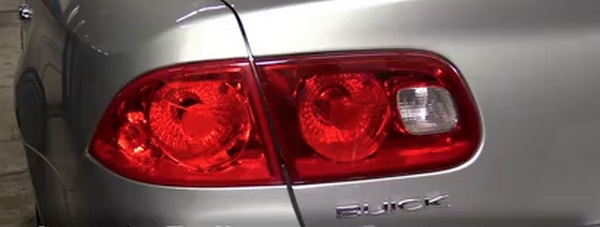
Buick Lucerne Brake Light Intermittent
The Buick Lucerne is pretty decent, usually trouble free vehicle. Aside from the plastic door handles that eventually let go if pulled too hard a mysterious wet trunk, and leaking windshield pillar, there is the also the infamous intermittent brake light, Gluing the door handle on or sealing the trunk body seam with silicon are easy enough fixes, but the brake light switch? Give me a break!
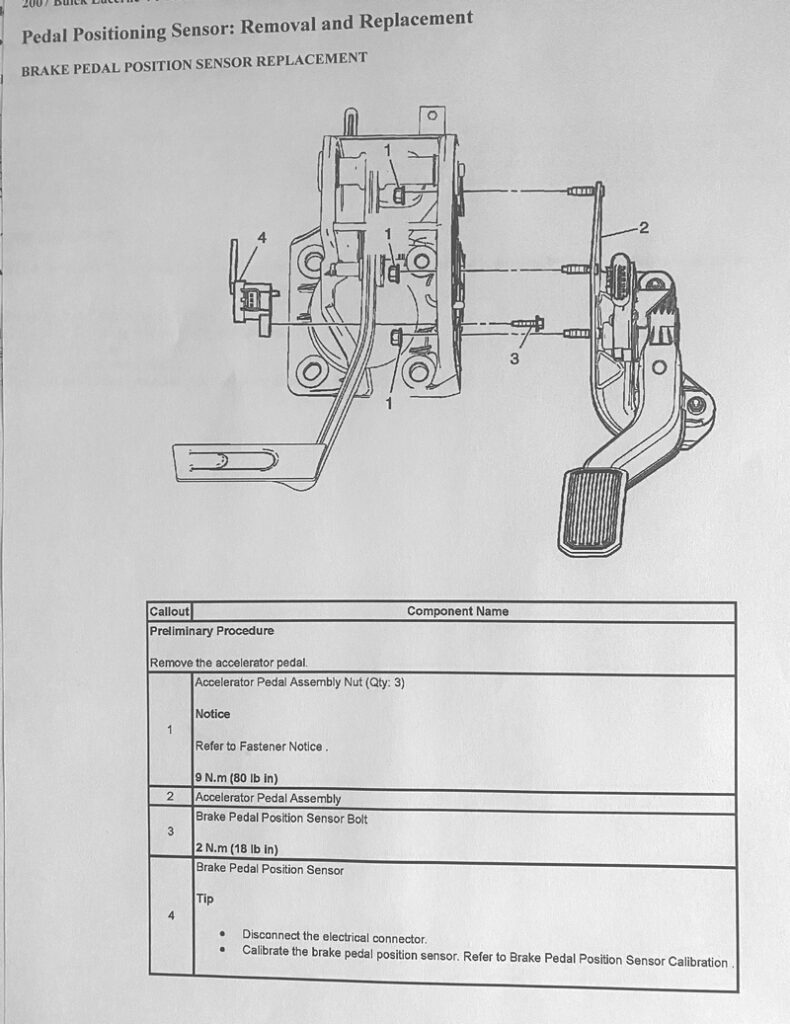
Instead of just using a simple on/off switch, the brake pedal switch here is akin to a rheostat or potentiometer. Changing it is no picnic either. Aside from having to be an upside-down contortionist, the gas pedal must be removed in order to gain access to the bolts that hold the switch in place. Nice. Another one of those “lets screw the mechanic” engineering specials.
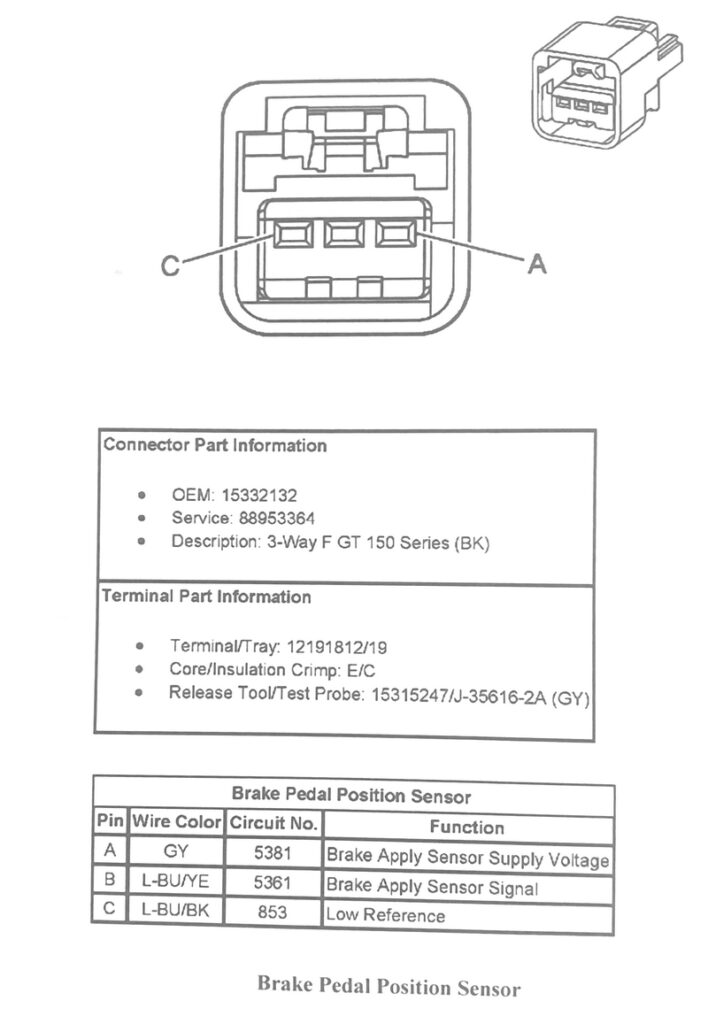
The switch is a three pin device with an arm which is pushed by the brake by a horizontal pin and moved along with depth of the pedal. According to documentation, it has three connections: A grey supply voltage line going to connector pin A, Blue/Yellow signal wire going to pin B, and Blue/Black low reference wire going to C. A variable switch reading so the Body Control Module knows how hard you are pressing the brakes.
Although calibration repair information claims 10 volts is sent from the BCM to pin A, my measurement from A to C read 3.67 volts with A as negative. Reading C to ground gave the same so it seems A is ground, not source. The signal return (B) was about .69 at rest and went up to around 3.25 as the pedal was pushed down.
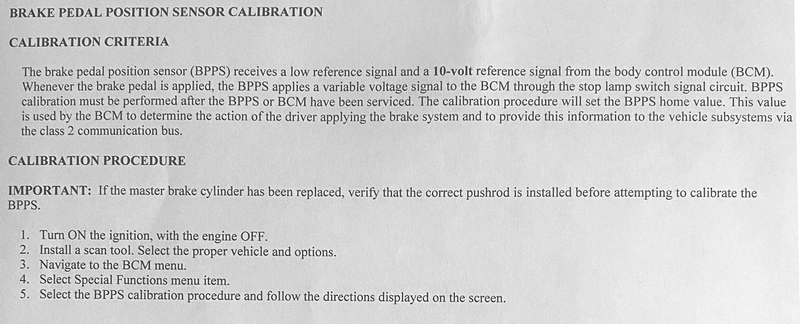
Resistance readings of the switch itself show 3K between A and C, and from 1K to 4K on B from either A or C as the switch is moved. This leads to the conclusion that the wiper has a 1K resistance value of its own and explains why we never see zero voltage at the wiper pin B. It would seem that in order to alter the voltage at B, resistance could be added in series between the switch and source voltage. A small change here would alter the ratio and change the wiper reading. In theory, we could move this up or down depending on where we add the resistance (low or source voltage).
In this case, an added potentiometer in series with the blue/black (C) line allows for some variation in the ratio to effect the wiper voltage reading and for now, it appears to have corrected the cold intermittent condition but only time will tell. Obviously, the real solution is going to be a re-learn with a Tech2 or similar product but in the mean time, the work around may provide some temporary relief.
2025-04-18 update:
I purchased and used VCX Nano from VxDiag to run the Tech2 relearn. More on that…