


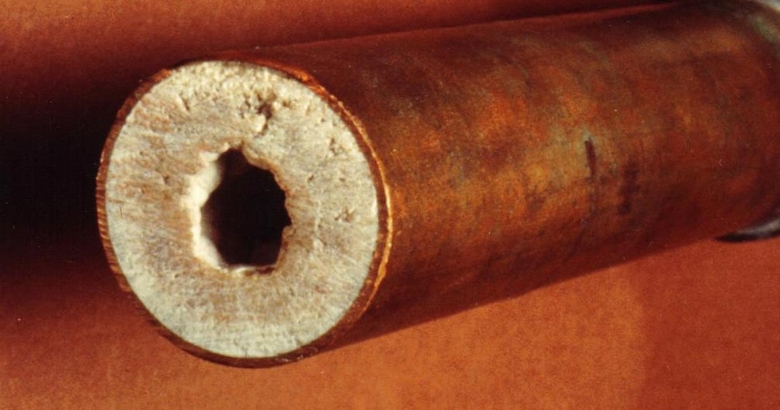
Rural Saskatchewan can be challenging with isolation, poor roads, lack of infrastructure and poor employment opportunities. It offers some of the worst water quality one can find too. Sheho is certainly no exception. The village relies on two wells which were probably pretty good back in the day. Today, it has been ravaged by high ammonia content and is about the hardest water around. It’s hard. Really hard.
Two softeners back to back set at 45 grains isn’t enough to compensate for the water one can walk on. Challenges of cleaning seem endless. On the bright side, the water does not appear to have high iron so one step less in the cleanup process. Unfortunately, even a spin down filter followed by two 5 micron filters doesn’t last long here.
Chlorine and Ammonia when mixed produce a thick red/yellow sludge not to be mistaken for high iron content. The filters do not last very long – typically two days – before they need a good rinse. The video shows what comes out after two days of use.
Hard water and softener salt are a mixed bag on equipment too. Magnesium anode rods don’t last long in a hot water tank subjected to these conditions. Up to 75% of the rod is consumed annually and most fixtures show signs of deterioration. It also resulted in unpredictable hot water temperatures on a 2 year old gas heater. Water would begin as hot but quickly became cold even at the highest thermostat settings. It seemed as if the temperature sensor could no longer regulate but often this behavior is a result of dip tube failure.
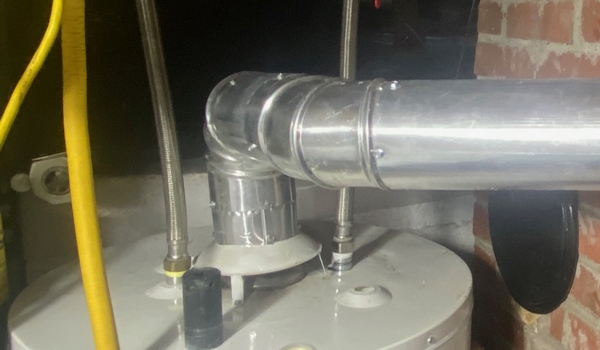
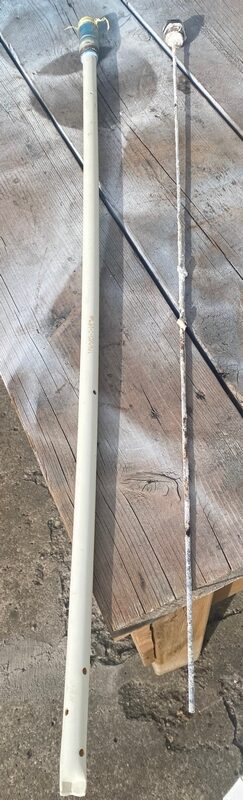
Rural living necessitates doing things yourself and often waiting until one has all the parts. New anode rod and dip tube in hand the process began. Murphy is around to help out. There was not enough room to get a pipe wrench on the dip tube without moving the tank. Ended up requiring the draining of the tank and disconnecting of the exhaust pipes. Strangely enough the dip tube seemed to be intact except it spun in the connector sleeve and had a lot of build up. The same could not be said for the anode rod – it was done.
With the tank mostly empty and possibility of build up on the thermostat sensor, CLR was used. An overnight soak followed by some sloshing the next day and a good rinse. With the re-assembled tank back in service, regulation was restored. Hard to say if the dip tube contributed to issues, but either way the anode rod needed a change. It isn’t hard to imagine build up having been the issue all along, though.